
Our Story
At McCubben Highland, we are passionate about nurturing and passing on the traditional dance form of Highland Dancing in Townsville. Our studio offers expert tuition for dancers of all ages, combining traditional techniques with a supportive community. We strive to inspire confidence and creativity, helping each dancer reach their full potential while celebrating the rich cultural heritage of Highland dance.
While named ‘McCubben Highland’ in 2014, our highland dance studio has been in operating in Townsville since February 2002. Owner/Teacher, Gwenda Nickson (nee McCubben) grew up with Highland Dancing under Irene Barton in Home Hill. She achieved her Elementary Teachers Certificate in 1986 while dancing with the Ceilidh Dance Studio in Mackay. Along with her Highland Dance Teachers Certificate, Gwenda also has a Certificate IIIs in Business Administration & Accounts Administration, Certificate IVs in Bookkeeping & Accounting, and a Certificate for First Aid. Gwenda is currently studying Ausdance’s ‘Safedance for Kids’ course.

Gwenda Nickson
Trading as
McCubben Highland
ABN 51257472411
Gwenda has memberships with:
-
National Dancing Association of Australasia Incorporated (an examination body). https://www.ndaahighland.com
-
Far North Queensland Regional Committee of Highland Dancing Inc.: a regional committee operating under the Australian Board of Highland Dancing Inc. which in turn is under the auspices of the Royal Scottish Official Board of Highland Dancing in Scotland. https://fnqrchdi.com.au, https://www.abhdi.com, https://highland-dancing.com
-
Townsville Highland Dancing Association Inc.: A support group (like a school P & C) for all highland dancers across Townsville whose primary role is as a competition organiser under the membership of the FNQRCHDI. (has a Facebook page)
-
Townsville Scottish Community Inc. (has a Facebook page)
-
Ausdance. https://ausdance.org.au
Why does Gwenda teach highland dance: -
To share her love for highland dance, and to encourage each student to be the best dancer they can be; enabling them to reap the benefits that will enhance their quality of life.
Our Studio
Our studio is airconditioned and has a sprung floor. It is located in our rumpus room on the ground floor of the residence with amenities in the next room. We run a PowerPoint display of the class program to help those with attention/memory issues.

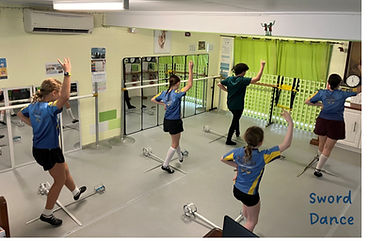
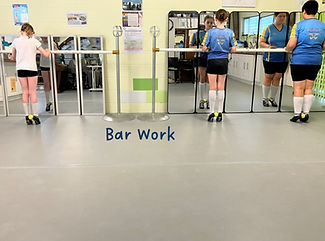

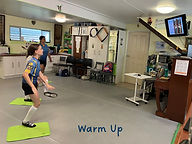
Our Highland Dance Program Covers
A Scottish Heritage Dance Form
Shared with the World
Dance for Fun and Fitness
with opportunity for
Exams and Competitions
Traditional Highland Dances
Under 7’s Only
-
16 Pas de Basque
-
Pas de Basque & High Cuts
Highland Dances
-
Highland Fling
-
Sword Dance
-
Seann Triubhas
-
Strathspey
-
Highland Reel
-
Reel of Tulloch
Scottish National Dances
-
Scottish Lilt
-
Flora MacDonald’s Fancy
-
Wilt Thou go to the Barracks Johnnie
-
Highland Laddie
-
Scotch Measure
-
Village Maid
-
Blue Bonnets
-
Earl of Errol
Other Traditional Dances
-
Sailors Hornpipe
-
Scottish Version of the Irish Jig
-
Broad Swords
-
Highland Schottische
-
The Shepherd’s Crook
Cultural Appreciation
Engage with the rich history of Scottish dance while developing your skills, fitness and confidence.

We also do some Choreography
National Dancing Association of Australasia Inc. Exams
Website: https://www.ndaahighland.com
Highland Dances
-
Preliminary
-
Pre-Grade
-
Grade One
-
Grade Two
-
Grade Three
-
Grade Four
-
Grade Five
-
Elementary
-
Intermediate
-
Advanced
-
Solo
-
Teachers
Scottish National Dances
-
Grade 1 -Flora MacDonald’s Fancy
-
Grade 2 -Scottish Lilt
-
Grade 3 - Wilt Thou go to the Barracks Johnnie
-
Grade 4 - Highland Laddie
-
Grade 5 -Village Maid
-
Grade 6 - Scotch Measure
-
Grade 7 - Blue Bonnets
-
Grade 8 - Earl of Errol
Jig & Hornpipe
-
Junior
-
Intermediate
-
Advanced
Diversity in Learning Assessments
The Diversity in Learning Assessment provides an alternative for dancers who cannot participate in mainstream exams but still wish to engage in the examination process.
Exams – Provide an independent assessment of the standard the dancer is achieving and are essential for obtaining a teacher’s certificate. Exam syllabus work will be covered in technical classes whether or not students do exams, as it provides an excellent frame work for correcting and strengthening technique.

Competitions
RSOBHD - The Royal Scottish Official Board of Highland Dancing (“the Board”) is the World Governing Body of Scottish Highland Dancing, responsible for promoting, encouraging, and developing Highland Dancing throughout the world and for setting and controlling the technique and movements upon which Highland Dancing is based.
ABHDI - The Australian Board of Highland Dancing Inc. Is the Australian governing body of highland dancing under the auspices of RSOBHD. Championships are registered with the ABHDI.
FNQRCHDI - is the Far North Qld Regional Committee of Highland Dancing Inc. under the ABHDI. Ordinary competitions and all regional competitive dancers and teachers are registered with the FNQRCHDI.
Competitive dancers must be registered with the
Far North Queensland Regional Committee of Highland Dancing Inc.
Competitive dancers must wear costumes
as per the RSOBHS Dress Code.

There are Five Levels of Registration for Competitions
Dancers must be at least 4 years old to compete.
-
Primary - For competitors aged 4 to 6 years. This section has two introductory dances not danced in other levels, as well as two traditional dances.
-
Beginners - This status is held until the competitor gains 1st, 2nd or 3rd in Highland Fling, Swords, Seann Triubhas, or a Reel in six separate competitions. They may also compete in the Scottish Lilt and Flora MacDonald's Fancy though places gained in these two dancers are not marked on their registration card.
-
Novice This status is held until the competitor gains 1st, 2nd or 3rd in any of the six dances (as listed in the Beginner level) in six separate competitions.
-
Intermediate - This status is held until the competitor gains 1st, 2nd or 3rd in any of the ten dances in six separate competitions. Intermediate dances – only up to eight dances are danced per competition day. Sailors Hornpipe, Irish Jig Scottish Version, Highland Laddie, Wilt Thou go to the Barracks Johnnie, are added to the dances as listed in Beginner & Novice levels.
-
Premier - The top level. Premier dancers compete in any of fourteen dances – only up to 8 dances per competition day. Highland Fling, Swords, Seann Triubhas, a Reel, Scottish Lilt, Flora McDonald’s Fancy, Sailors Hornpipe, Irish Jig Scottish Version, Highland Laddie, Wilt Thou go to the Barracks Johnnie, Village Maid, Scotch Measure, Blue Bonnets, Earl of Errol.
Is highland dancing expensive?
Highland can be as expensive as you want it to be. At McCubben Highland every effort is made to keep class fees as low as possible, however costs involved in providing such tuition must be covered.
Class wear, apart from the shoes, is any dancewear/aerobicwear/sportswear, these things can be purchased at Big W, Kmart, etc. or a dancewear shop. An optional McCubben Highland studio shirt may be purchased through the teacher. Practice skirts may also be purchased through the teacher.
Costumes for exam and competitive students must adhere to RSOBHD Dress Code:
You may decide whether 2nd hand costumes are adequate for you, or you may want to buy new. If you can sew you may wish to make your own costumes. Gwenda has a few second-hand items for loan to McCubben Highland students while you make up your mind which way to go. If Gwenda has an item that fits your dancer, you may borrow that item as often as you require without having to buy your own at all. A copy of the dress code will be provided when required.
Select your costumes for exams and competitions with care, and they may last a few years growth.
-
Primaries only require one costume – Kilt outfit
-
Beginner & Novice level dancers only require two costumes – Kilt outfit and for girls, an Aboyne costume, and perhaps a choreography costume.
-
Intermediate & Premier level dancers require the same as for class 2 & 3 plus a Sailors outfit and a Scottish version of the Irish jig outfit, and perhaps a choreography costume.
As far as competitions are concerned, you may decide whether to attend only local competitions or whether to travel to other towns or states or even overseas, according to your family’s budget and timetable.